

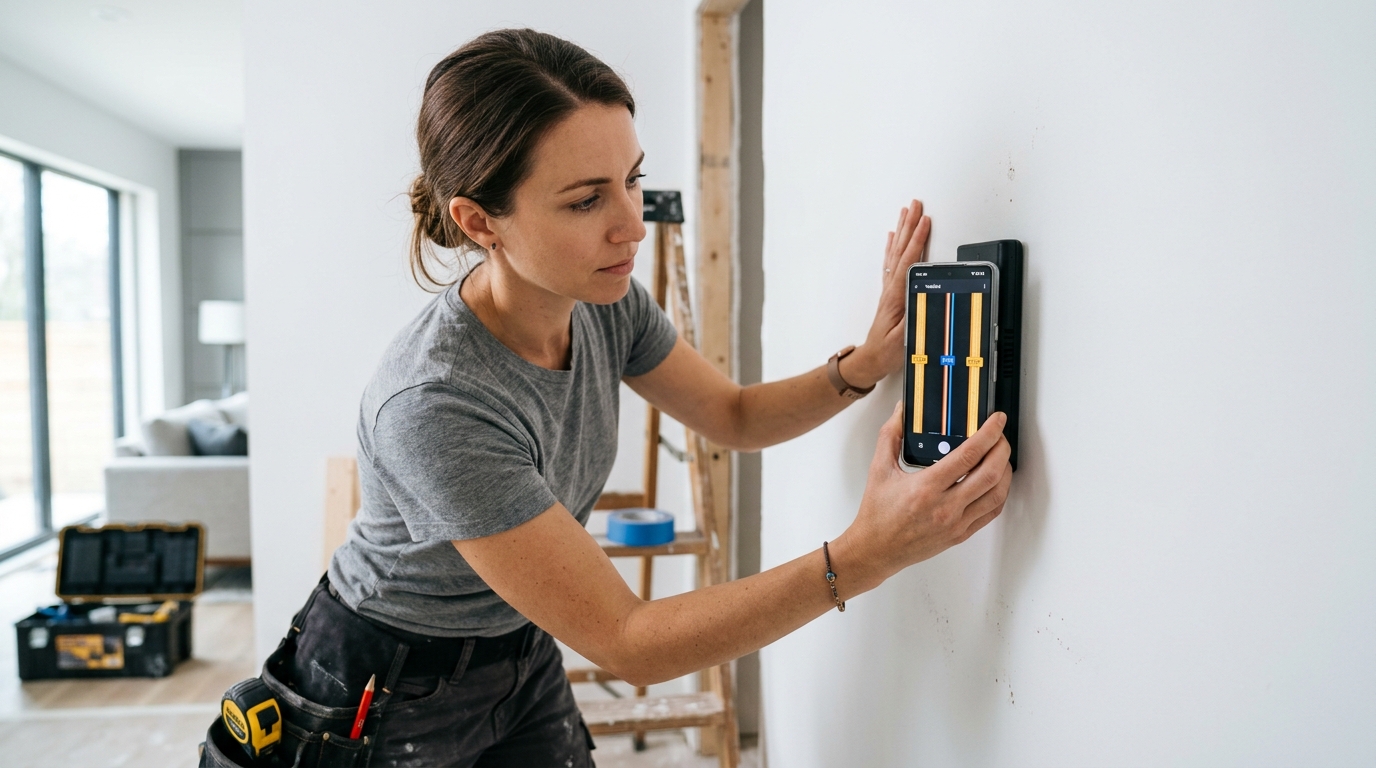
The 30-Second Bottom Line: If you drill into residential walls more than twice a year, the Walabot DIY 2 is the ultimate damage-prevention insurance. Its ability to distinguish between a hollow stud, a pressurized water pipe, and a live wire eliminates blind guesswork completely.
- Real-time visual 3D radar on iOS & Android
- Detects live 110V/220V wires up to 4 inches deep
- Accurately traces pipe curves behind sheetrock
- Requires brief 3-second surface calibration
- Cannot scan through sheet metal or stucco mesh
Why Traditional Stud Finders Cause Disasters
Standard $25 stud finders rely on basic capacitive sensors. When density increases near the sensor plate, the device beeps.
The problem? Capacitance cannot tell the difference between wood, metal, water, or air pockets. A nail plate guarding a water pipe triggers the same beep as the center of a two-by-four. Every year, over 280,000 American homeowners accidentally pierce a water line or sever an electrical circuit because their basic sensor misidentified the target.
How the Walabot DIY 2 Technology Works
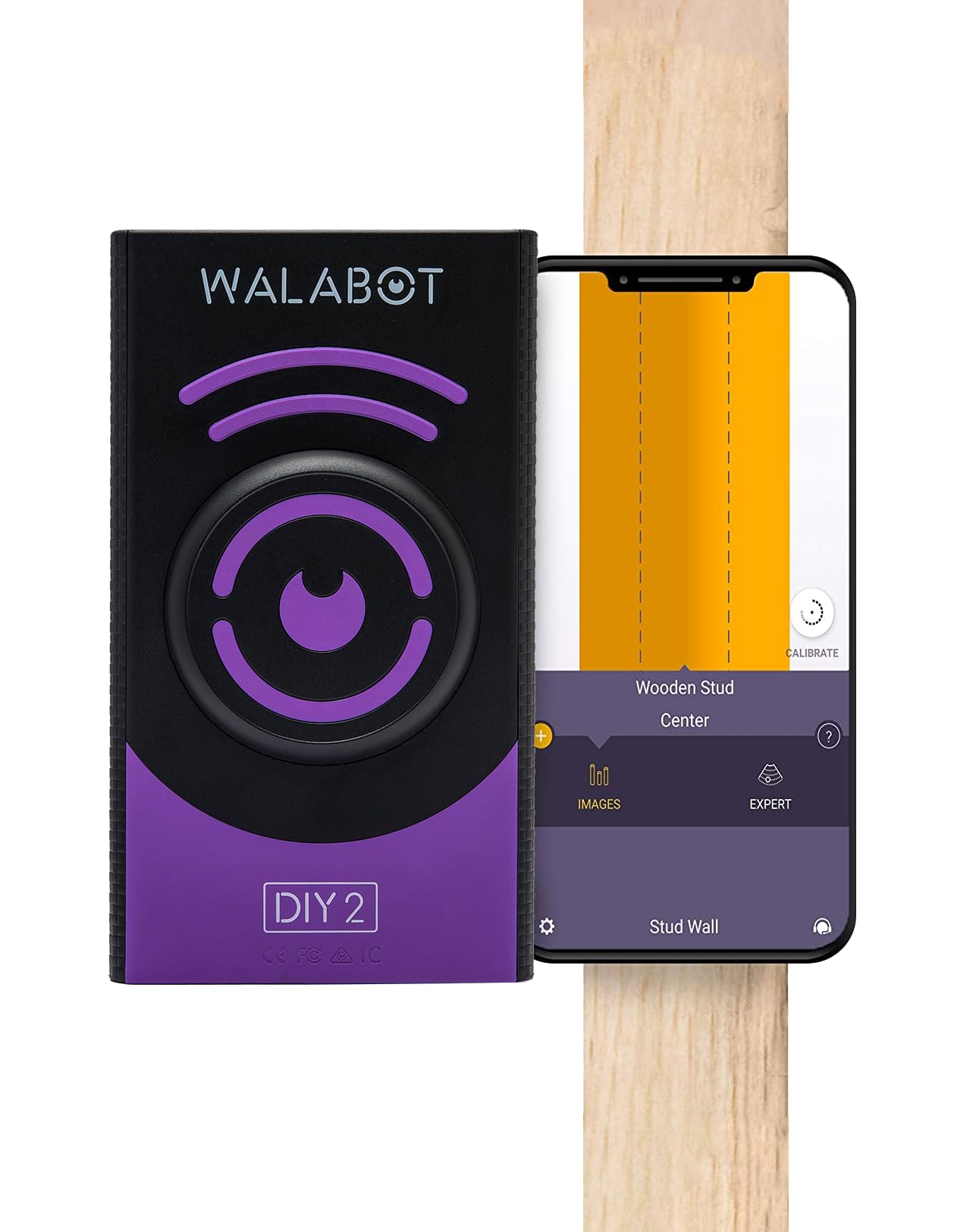
The Walabot DIY 2 utilizes multi-antenna RF radar microchips developed by Vayyar Imaging. When sliding the unit across the wall, multiple radio transmitters emit low-power micro-pulses and measure the microsecond reflection delays.
The onboard processor translates these reflections into a live 3D voxel density matrix transmitted over local Wi-Fi to your phone. The result is intuitive: wood studs appear as solid columns; pipes show exact circular contours; and live electrical lines pulse red with an audible alarm.
Laboratory Penetration Depth Benchmarks
| Wall Material | Target Type | Max Tested Depth | Detection Accuracy |
|---|---|---|---|
| Standard 1/2" Drywall | Wood 2x4 Stud | 4.0 inches | 100% (Pinpoint Center) |
| Standard 1/2" Drywall | 3/4" Copper Water Pipe | 3.8 inches | 100% (Live Contour) |
| Standard 1/2" Drywall | 110V Live Romex Wire | 3.5 inches | 100% (Audible Alarm) |
| Vintage Lath & Plaster | Cast Iron Drain Pipe | 2.8 inches | 94% (High Accuracy) |
Final Recommendation
If you are mounting a television, hanging heavy kitchen cabinetry, or planning any interior remodeling, the peace of mind offered by the Walabot DIY 2 is unmatched. A single avoided call-out to an emergency plumber pays for this device three times over.